
Ventura County Leak Guide
Could a Hidden Slab Leak Be Causing These Warning Signs?
A warm floor, unexplained meter movement, or recurring dampness may point below the foundation, but several simpler leaks can look similar. Here is how to separate a warning sign from a diagnosis.
What are the strongest signs of a slab leak?
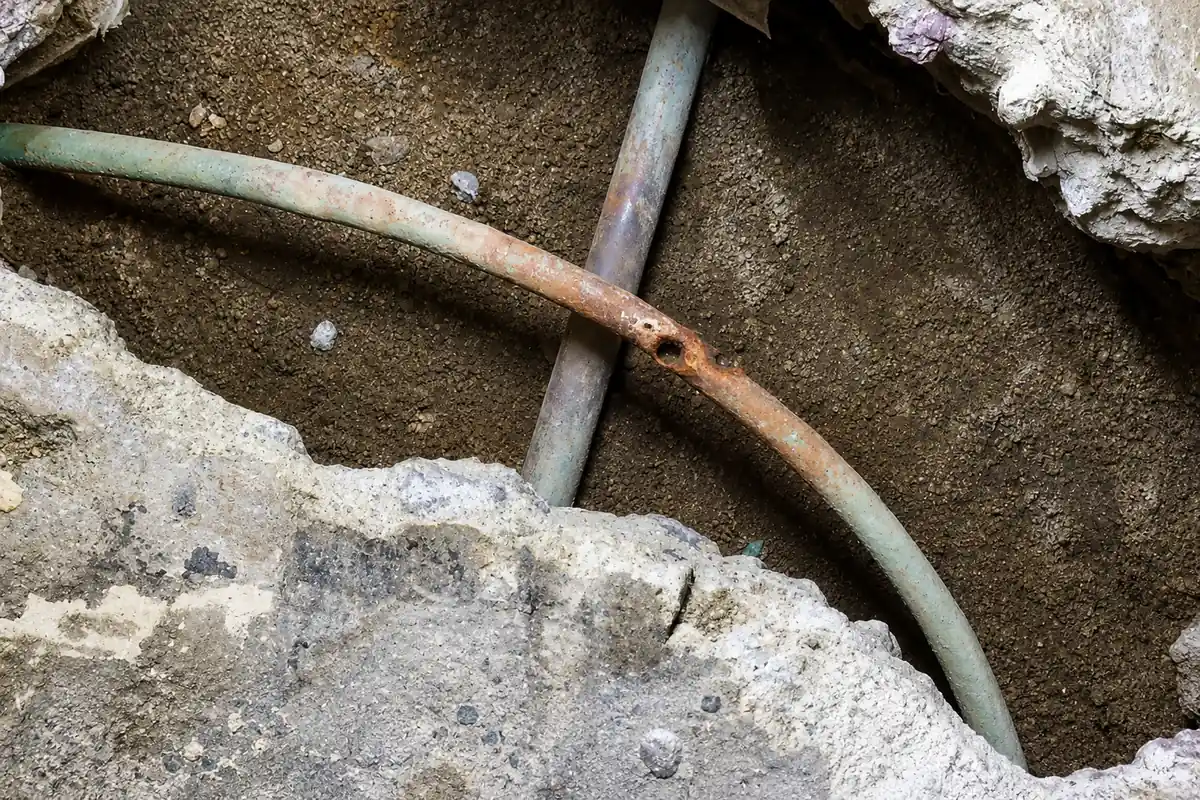
The most useful warning pattern is continuous water use when every fixture is off, combined with a location clue such as an unexplained warm or damp floor area, sound of running water, damaged flooring, or moisture near a wall. A higher bill alone is not proof. Running toilets, irrigation leaks, outdoor faucets, and water-treatment equipment should be checked first. A plumber can then isolate the supply system and use locating equipment before recommending access or repair.
A slab leak is a leak in a water-supply pipe routed in or below a concrete foundation. Because the pipe is hidden, the first evidence often appears somewhere other than the damaged spot. Water can move along a pipe sleeve, slab crack, wall plate, flooring seam, or the soil beneath the home before becoming visible.
That is why a stain or warm tile should be treated as a clue rather than a precise map. Good diagnosis narrows the system, confirms that water is being lost, distinguishes hot from cold piping, and then identifies the most likely section. It does not begin by guessing where to break concrete.
Seven warning signs worth checking
1. The water meter moves when everything is off
EPA WaterSense recommends checking the meter before and after a period when no water is used. If the reading changes, water is moving somewhere in the system. Turn off faucets, ice makers, dishwashers, washing machines, irrigation, pool fill lines, and other automatic equipment before testing. A changing meter confirms possible water loss, but it does not prove the leak is under the slab.
2. A water bill rises without a matching change in use
Compare similar billing periods and account for visitors, hotter weather, landscape watering, pool use, and rate changes. A steady increase across more than one bill is more informative than one unusual month. If the meter also moves during a no-use test, the two clues justify further investigation.
3. One floor area feels unusually warm
A hot-water line leaking below tile or another conductive surface may create a warm area. Compare it with nearby flooring after the heating system and hot-water appliances have been idle. Heating ducts, sunlight, radiant systems, and appliance heat can create similar sensations, so warmth is useful only when paired with other evidence.
4. Flooring becomes damp, discolored, loose, or warped
Moisture may darken grout, loosen adhesive, cup wood, lift laminate, or create a soft transition near a wall. Do not assume the source is plumbing. Exterior water intrusion, a leaking appliance, a shower enclosure, a toilet seal, or a drain problem can affect the same finishes.
5. You hear water when no fixture is running
A faint hiss or flow sound can travel through framing and pipe. Listen near supply manifolds, water-heater connections, bathrooms, and the suspected floor area. The sound may help guide testing, but pipes transmit noise and the loudest point is not always the leak location.
6. Water pressure changes unexpectedly
A substantial supply leak can affect available pressure, particularly while another fixture is operating. Gradual low pressure is also caused by mineral restriction, a pressure-regulating valve, a partially closed shutoff, or fixture debris. Pressure symptoms need system-wide testing rather than an immediate slab-leak conclusion.
7. A musty odor or recurring moisture returns after drying
Repeated dampness near baseboards, flooring, or a lower cabinet needs attention even when the area looks minor. Moisture meters can help define the affected materials, but they do not identify the source by themselves. Drying the surface without stopping the water allows damage to continue.
Rule out common leaks before blaming the slab
Most hidden-water investigations begin with less invasive possibilities because they are common and easier to verify. EPA guidance specifically calls out toilets, faucets, showerheads, irrigation lines, and other household sources. A silent toilet leak can run continuously without leaving water on the floor.
Add a few drops of food coloring to the tank and wait without flushing. Color entering the bowl suggests the flapper or another tank component is leaking.
Look for saturated soil, a valve box that stays wet, uneven spray, or meter movement that stops when irrigation supply is isolated.
Inspect relief discharge piping, drains, softeners, filters, condensate, and nearby connections for cycling or moisture.
Check refrigerators, dishwashers, washing machines, tubs, showers, sinks, outdoor faucets, and accessible supply lines.
If the meter stops when the home’s main shutoff is closed, the loss may be on the building side of that valve. If it continues, the service line or another arrangement may need investigation. Valve layouts vary, so do not force an old shutoff or assume one test identifies the exact pipe.
How a professional diagnosis usually progresses
Review the pattern
Compare bills, meter behavior, hot-water use, pressure changes, visible moisture, and when each symptom occurs.
Inspect accessible sources
Check fixtures, appliances, irrigation, water-heater components, exposed pipe, and other likely leak points.
Isolate the piping
Use shutoffs and pressure testing as appropriate to determine which part of the water system is losing pressure or flow.
Narrow the location
Acoustic listening, thermal imaging, line tracing, moisture mapping, or another method may help identify the affected route.
Choose a repair path
Compare direct access, rerouting, or a broader piping solution based on location, pipe condition, access, and prior leak history.
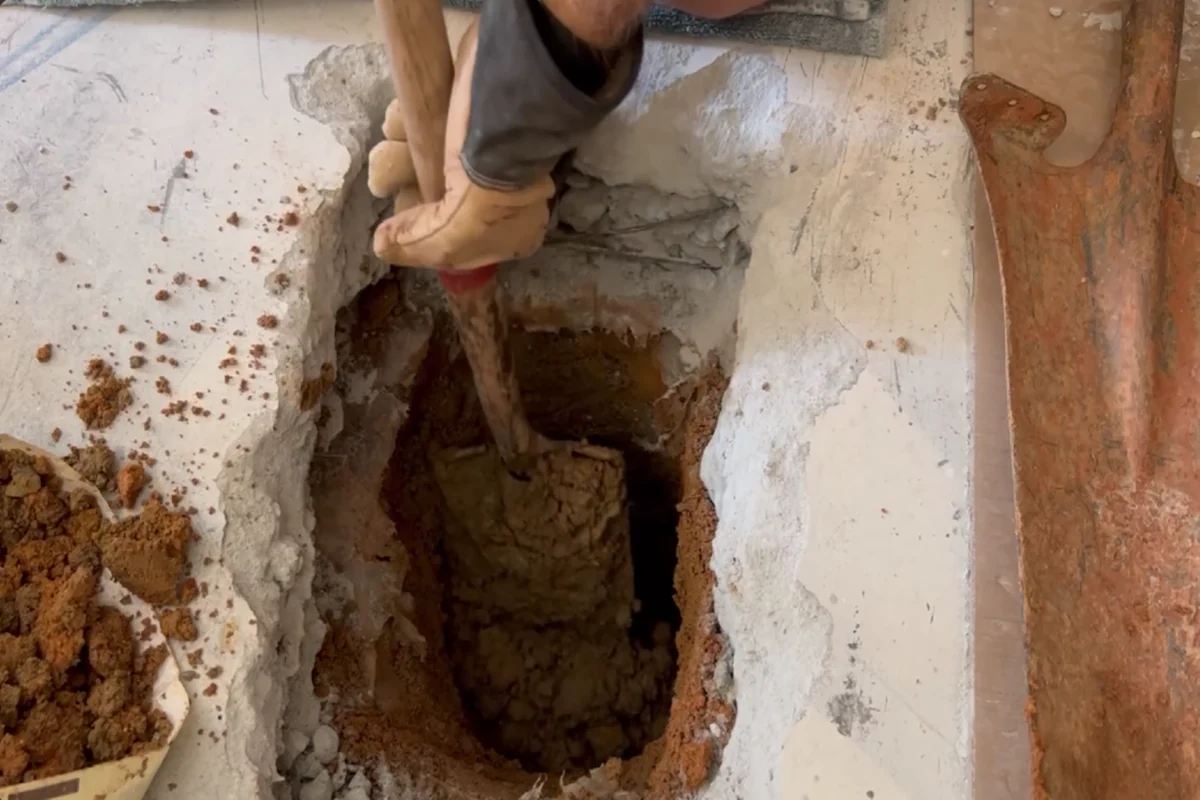
No single device is perfect in every home. Acoustic equipment depends on the sound transmitted by the leak and surrounding materials. Thermal imaging shows temperature patterns rather than seeing through concrete. Moisture readings show where material is wet, which may be away from the source. Combining observations produces a more defensible repair plan.
Repair options after the leak is located
| Option | When it may fit | What to clarify |
|---|---|---|
| Direct access | The damaged point can be reached with a limited opening and the nearby pipe is otherwise serviceable. | Flooring removal, concrete opening, pipe repair, drying, patching, and finish restoration. |
| Reroute | A new path through walls, ceilings, or another accessible route can bypass the failed under-slab section. | New route, wall openings, insulation, shutoffs, pressure, abandoned-pipe handling, and finish repairs. |
| Partial or full repipe | Multiple leaks, widespread deterioration, or inaccessible routing indicates a broader system problem. | Which lines are included, new material, access points, fixture connections, permits, patching, and warranty. |
A single isolated failure does not automatically justify repiping. Conversely, repeatedly opening floors to repair different weak points may cost more and disrupt the home more than addressing the aging system. If leaks are recurring, compare the larger pattern with the options on our Ventura repiping page.
Why local context still matters
Ventura County homes vary widely in age, foundation design, piping material, additions, and past remodeling. Two houses on the same street may have different routes or previous repairs. Local water sources also differ. Ventura Water’s current annual report lists multiple supply sources and a broad range of hardness, which can influence scale and maintenance conditions but does not prove why an individual pipe failed.
The useful local question is not “Do homes here get slab leaks?” It is “What material and route are in this home, what symptoms are present, and what do the tests show?” That keeps the recommendation tied to evidence rather than a neighborhood assumption.
Need the leak confirmed before opening the floor?
Our slab leak repair service explains detection and repair options. For a broader concealed-leak assessment, see leak detection and repair in Ventura.
Frequently asked questions
Can a slab leak stop on its own?
No reliable repair occurs without correcting the damaged pipe. Symptoms may appear to slow when pressure, temperature, or water use changes, but a confirmed supply-line leak still needs repair.
Is a warm floor always caused by a slab leak?
No. Sunlight, ducts, radiant heating, appliances, and normal hot-water routing can warm flooring. Combine the observation with meter movement, sound, moisture, or pressure testing.
Can I confirm a slab leak with the water meter?
The meter can show that water is moving during a no-use period. It cannot identify the location. First rule out toilets, irrigation, appliances, and other accessible uses, then isolate and test the plumbing system.
Do you have to break concrete to find the leak?
Diagnosis usually begins without opening concrete. Acoustic, thermal, pressure, line-tracing, and moisture tools can narrow the location. The chosen repair may still require access.
Will homeowners insurance cover slab-leak damage?
Coverage depends on the policy, cause, timing, and what was damaged. Ask the insurer what documentation is required before demolition and distinguish pipe repair from resulting water damage and restoration.
Can a slab leak cause foundation cracks?
A leak can saturate soil and damage finishes, but a crack alone does not establish the cause. Foundation movement has many possible explanations. Plumbing and structural questions should be evaluated separately when needed.
Should I shut off the water?
If water is actively spreading or the meter is moving rapidly, shutting off the main can limit additional loss when the valve is safe and functional. Do not force a seized valve or enter an unsafe wet area.
When does rerouting make more sense than spot repair?
Rerouting may make sense when direct access would be highly destructive, the route is difficult to reach, or the failed section can be bypassed cleanly. Repeated failures may justify comparing a partial or full repipe.
About this guide
Sespe Plumbing Pros has served Ventura County since 1992. This guide helps homeowners recognize a concealed-leak pattern while avoiding destructive assumptions before testing identifies the source.
One Comment