
Water Heater Guides
Why Water Heaters Fail Faster in Hard Water Areas
Ventura County’s mineral-heavy water can leave a hidden layer of sediment inside a water heater. Here is what that buildup changes, which warning signs matter, and when maintenance may still help.
Short answer
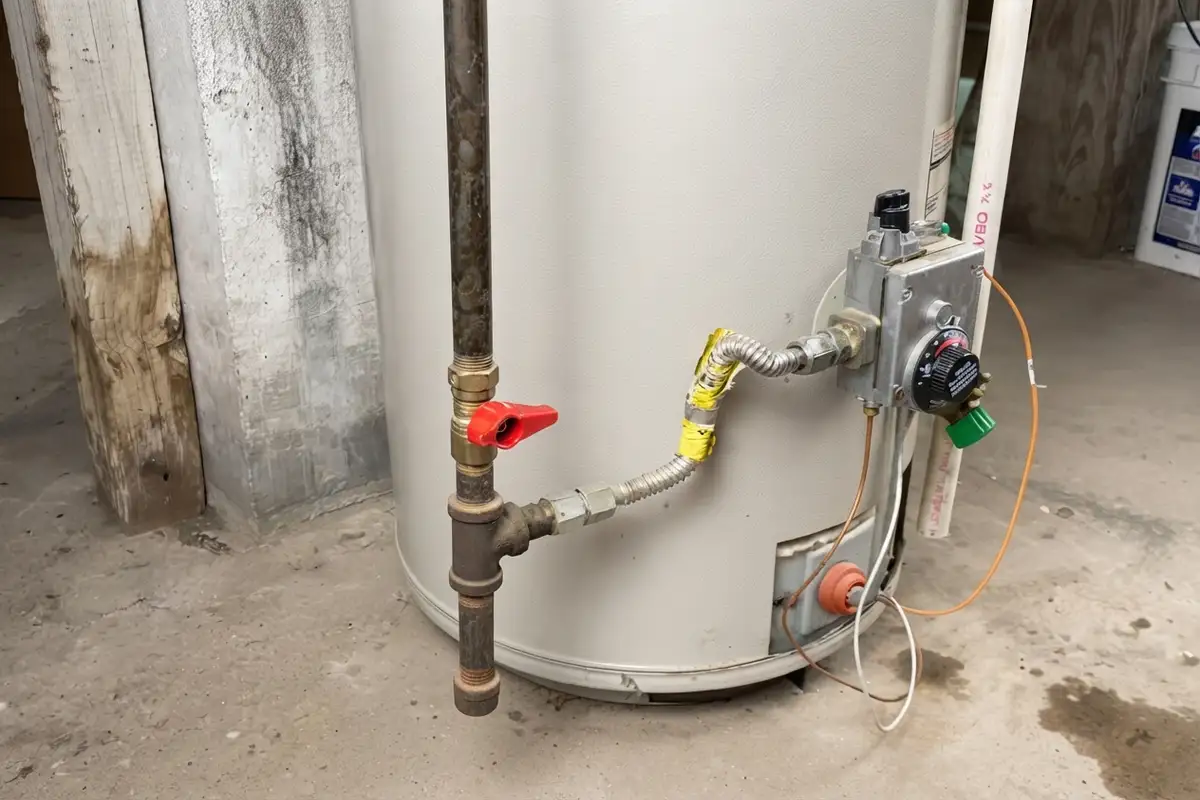
Hard water does not usually ruin a water heater overnight. It leaves calcium and magnesium deposits that settle in a storage tank or cling to heated surfaces. As that layer grows, the unit may heat more slowly, make noise, use more energy, and place extra stress on components. Ventura’s water is classified as very hard, so maintenance and an accurate diagnosis matter.
Key takeaways
- Ventura’s groundwater is generally harder than Lake Casitas water.
- Rumbling, slower recovery, and reduced hot-water volume can point to sediment, but they are not proof by themselves.
- Flushing may remove loose sediment; it cannot reverse corrosion or every hardened deposit.
- A standard whole-house filter does not automatically soften water.
What hard water does inside a storage tank
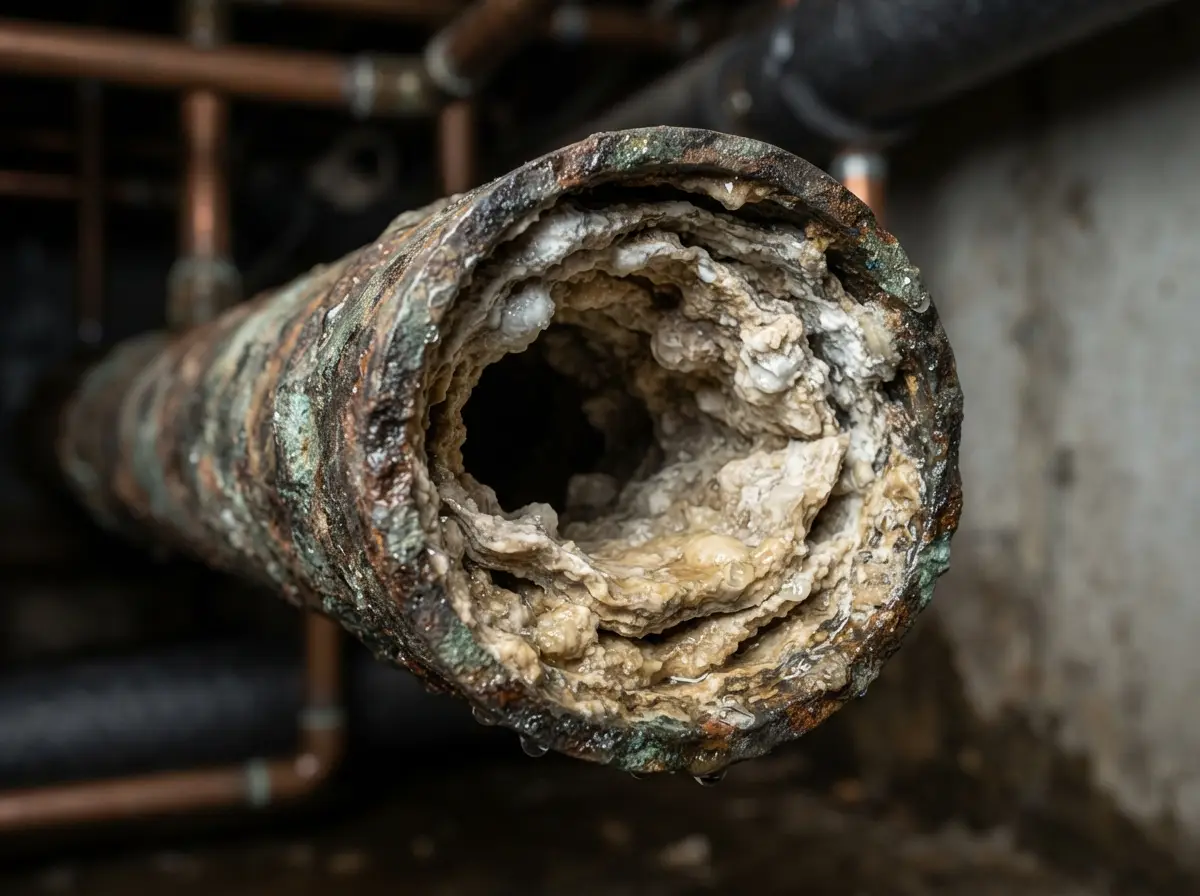
Hard water contains dissolved calcium and magnesium. Heating changes how those minerals behave. Some precipitate out of the water and collect as sediment at the bottom of a tank, while some form scale on surfaces exposed to heat.
In a gas water heater, a deep sediment layer can act like insulation between the burner and the water. Heat must travel through the deposits before reaching the tank water. In an electric model, minerals can coat the heating elements themselves. Either condition can contribute to longer heating cycles and component stress.
Ventura’s water source changes the risk
The City of Ventura blends water from the Ventura River, Lake Casitas, and local groundwater. The source serving a property can change, and the hardness levels are not identical. Ventura Water’s 2026 Consumer Confidence Report, which covers 2025 test data, reports the following concentrations as calcium carbonate:
| Ventura water source | Typical hardness | Reported range |
|---|---|---|
| Ventura River | 437 ppm | 424 to 463 ppm |
| Lake Casitas | 263 ppm | 263 ppm reported |
| Groundwater | 637 ppm | 489 to 911 ppm |
The U.S. Geological Survey classifies water above 180 mg/L, equivalent to ppm for this measurement, as very hard. All three Ventura sources are above that threshold. Actual water at a specific home can vary with source blending and system conditions.
Warning signs worth investigating
No single symptom confirms hard-water damage. The useful question is whether the symptom, the unit’s condition, its maintenance history, and an on-site test point to the same cause.
| What you notice | How sediment may be involved | Sensible next step |
|---|---|---|
| Rumbling or popping | Water and steam may be moving through deposits near the heat source. | Have the noise diagnosed, especially if it is new or worsening. |
| Slower recovery or less hot water | Buildup can reduce useful tank volume or interfere with heat transfer. | Check temperature, controls, elements or burner, and tank condition. |
| Higher energy use | Longer heating cycles may be needed to reach the set temperature. | Compare usage and rule out leaks, settings, and failing components. |
| Rusty or discolored hot water | Internal corrosion or a depleted anode rod may be involved. | Do not assume flushing alone will fix it; inspect the tank and supply. |
| Moisture or leaking | Corrosion can eventually compromise a fitting or the tank itself. | Turn off the appropriate supply if safe and arrange prompt evaluation. |
What helps, and what does not
Follow the manufacturer’s maintenance guidance
Periodic draining or flushing can remove loose sediment. The correct method and interval depend on the model, installation, water conditions, and service history.
Inspect the anode rod
The sacrificial anode rod helps protect a steel tank from corrosion. It does not remove calcium or magnesium, but replacing a depleted rod at the right time can protect the tank.
Match treatment to the water problem
A cation-exchange softener is designed to reduce hardness minerals. Sediment, carbon, and other filters target different contaminants. A water test helps identify what treatment is appropriate.
Do not expect maintenance to reverse damage
Flushing can move loose deposits. It cannot repair a corroded tank, restore a failed element, or guarantee removal of hardened scale bonded to a surface.
If water quality is the broader concern, compare the treatment goal before choosing equipment. Our guide to whole-house water filtration in Ventura explains where filtration fits, but a standard filter should not be described as a water softener unless it is specifically designed and certified for hardness reduction.
What about tankless water heaters?
Tankless systems do not store a tankful of sediment, but hard-water scale can collect inside their narrow heat exchanger passages. That can restrict flow and reduce heat transfer, which is why manufacturer-approved descaling remains important.
When maintenance is no longer enough
A noisy or slow water heater is not automatically a replacement. A technician can evaluate the heat source, controls, electrical or gas components, anode rod, valves, venting where applicable, and the condition of the tank. A targeted repair may make sense when the tank is sound and the fault is isolated.
Replacement becomes more reasonable when the tank is leaking, corrosion is advanced, repairs are recurring, parts are unavailable, or the unit no longer matches the household’s demand. The decision should be based on condition and repair economics, not a generic age cutoff. See our water heater repair guide for diagnosis and our water heater installation guide for sizing, fuel, permit, and replacement considerations.
Frequently asked questions
Does hard water shorten a water heater’s life?
It can contribute to earlier wear by creating sediment and scale that reduce heat transfer and stress components. Actual service life also depends on tank condition, installation, water temperature, maintenance, usage, and equipment quality.
What causes a water heater to pop or rumble?
Sediment near the heat source is one possible cause. Water or steam moving through deposits can make noise. Because other faults can sound similar, diagnose the unit before assuming a flush will solve it.
Can flushing remove all hard-water damage?
No. Flushing may remove loose sediment, but it cannot reverse tank corrosion, repair worn components, or always remove hardened mineral scale. The result depends on the tank’s condition and maintenance history.
Is Ventura groundwater harder than Lake Casitas water?
Ventura Water’s 2026 report lists typical groundwater hardness at 637 ppm and Lake Casitas at 263 ppm. Both are very hard by the USGS classification, but groundwater is typically higher.
Does a whole-house filter soften water?
Not necessarily. Typical sediment and carbon filters target particles, tastes, odors, or certain contaminants. Hardness reduction usually requires a technology designed for dissolved calcium and magnesium, such as cation exchange. Check the system’s certification and performance claims.
How do I decide whether to repair or replace the unit?
Look at the tank’s integrity, exact failed part, repair cost, recurring problems, energy performance, available parts, and whether capacity still fits the household. A leaking or heavily corroded tank usually changes the decision more than age alone.
One Comment