
Water Heater Repair in Ventura, CA — Diagnosed Right the First Time
Water heaters rarely fail quietly. There is usually a warning first, a rumble at night, hot water that runs short a little sooner each week, a damp ring on the garage floor. Catching it at the warning stage is the difference between a part and a whole unit. Sespe Plumbing Pros has been repairing water heaters across Ventura since 1992.
Free estimates. A real person answers the phone. Call 805-285-4021 now.
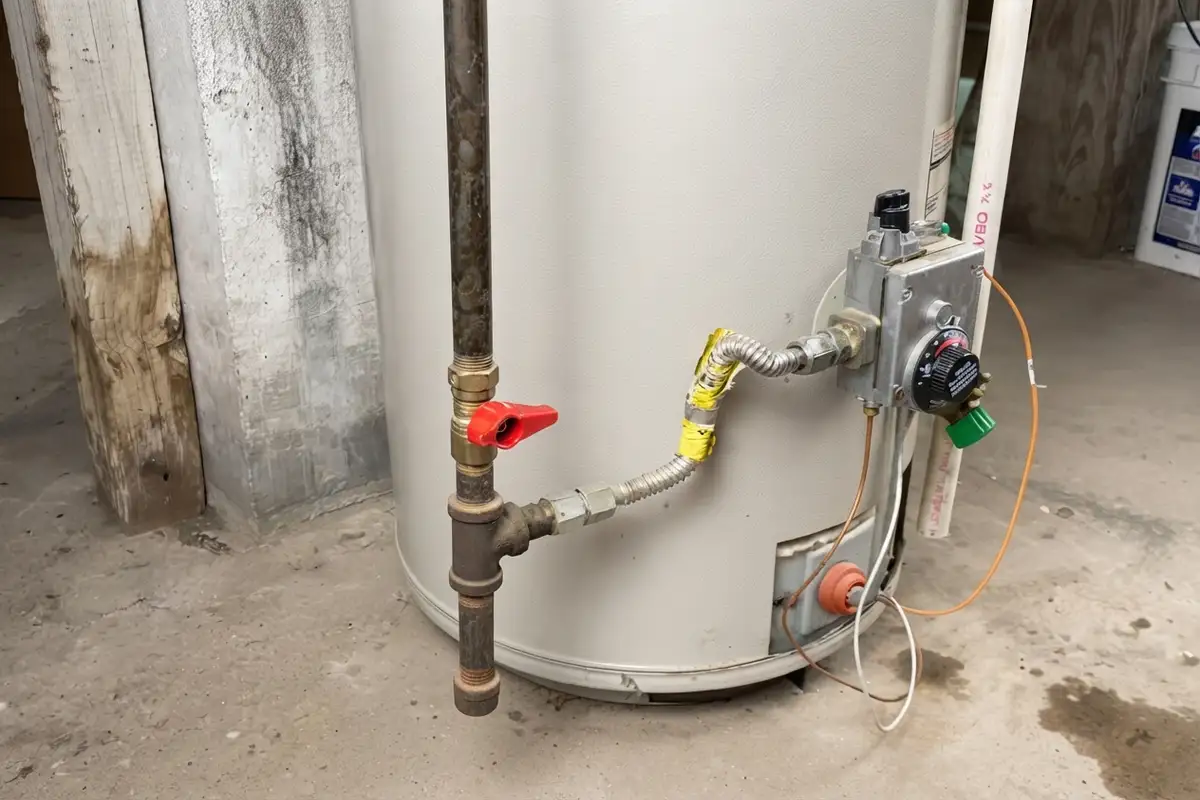
Water Heater Repair in Ventura
Water heater repair addresses no hot water, hot water that runs out early, leaks, rumbling or popping, rusty water, and pilot or ignition failures. Most of those trace to a small number of parts: a thermostat, a heating element, a thermocouple or gas control valve, an anode rod, or sediment in the tank. A leak coming from the tank body itself is different, and usually means replacement. Call 805-285-4021 for a free estimate.
Trusted by Ventura County homeowners since 1992.
Start Here: Where Is the Water Coming From?
If you are looking at water around the base of the unit, this is the question that determines everything else, and you can often answer it yourself before we arrive.
If water is spreading and you can safely reach the cold water shutoff above the unit, closing it will slow things down. On a gas unit you can also turn the gas control to the off or pilot position. If you smell gas at any point, leave the area first and call 805-285-4021.
Symptoms and What They Usually Mean
No hot water at all
On a gas unit, most often the pilot has gone out and will not stay lit, which usually points to the thermocouple, or the gas control valve has failed. On an electric unit, most often a heating element or thermostat has failed, or the high-limit switch has tripped and needs to be reset and the cause found.
Hot water runs out faster than it used to
Usually sediment. Mineral deposits settle in the bottom of the tank and take up volume that used to hold water, so a 50-gallon tank behaves like a smaller one. On electric units it can also mean the lower element has failed while the upper one still works, which produces a short burst of hot water followed by cold.
Rumbling, popping, or a sound like gravel
Water trapped under a sediment layer flashing to steam as the burner fires beneath it. Flushing helps when it is caught early. Heavy, hardened sediment in an older unit is harder to clear and often signals the unit is late in its life.
Rusty or brown hot water
If it is only on the hot side, it usually points to a spent anode rod and corrosion starting inside the tank. If it appears on hot and cold both, the issue is more likely the supply piping than the heater.
Rotten egg smell in the hot water
A reaction between the anode rod and bacteria in the tank. Not usually dangerous, and often addressable, but it does need diagnosis rather than guessing.
Water too hot, or temperature swinging
Thermostat. On an electric unit either thermostat can be the culprit. Water that is dangerously hot should be addressed promptly.
Breaker tripping repeatedly on an electric unit
Usually a shorted element or a wiring fault. Repeated resetting without diagnosis is not a fix.
Repair or Replace
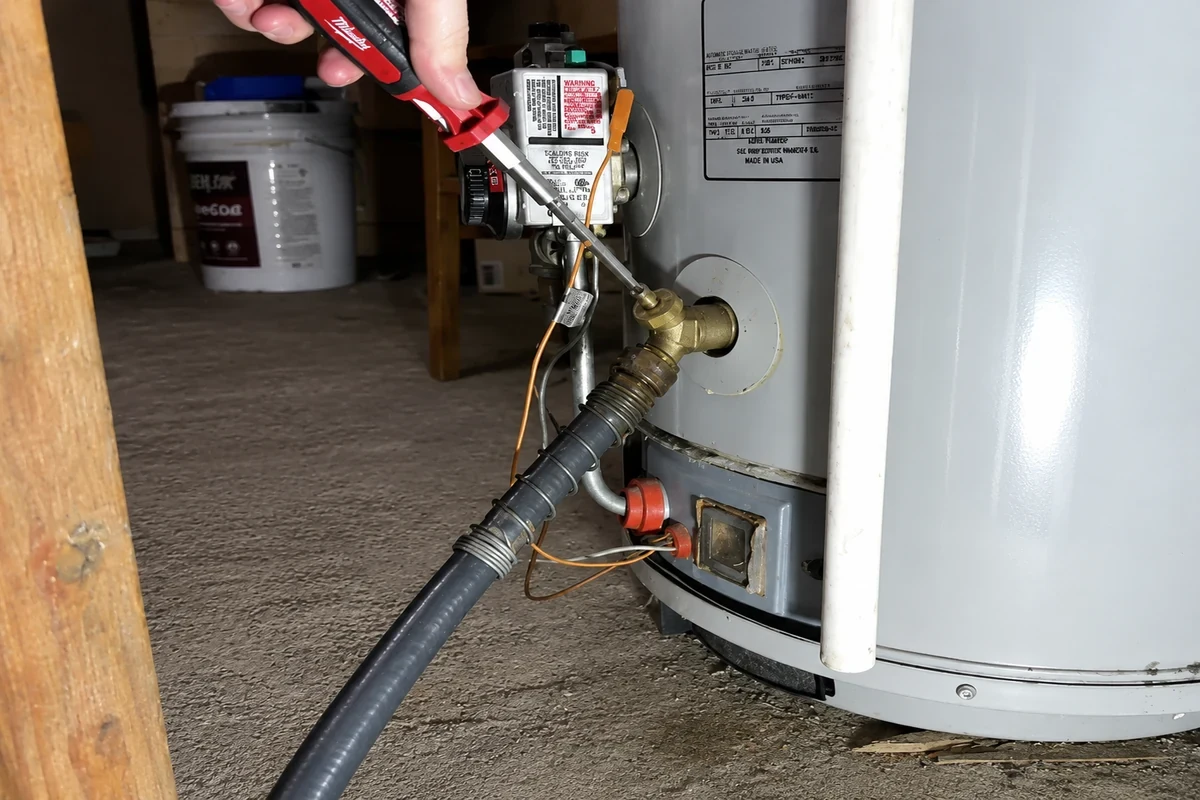
We will give you a straight answer, and this is the framework behind it.
Repair usually makes sense
when the unit is in the earlier part of its service life, one identifiable component has failed, the tank shows no sign of internal corrosion, and the repair costs a modest fraction of replacement.
Replacement usually makes sense
when the tank itself is leaking, when the unit has already needed several repairs, when rust is showing up in the hot water, or when the household’s demand has outgrown the unit and no repair changes that.
The awkward middle case is a repairable failure on a unit that is near the end of its expected life. There is no universally right answer there. We will tell you what the repair costs, what we would expect from the unit afterward, and let you decide rather than deciding for you.
One local factor belongs in that decision. Hardness accelerates sediment accumulation, and sediment is what shortens tank life here. Ventura Water’s 2024 water quality report lists hardness by source. Lake Casitas water is about 263 ppm, roughly 15 grains per gallon. Ventura River water averages about 445 ppm, roughly 26 grains. Local groundwater averages about 637 ppm, roughly 37 grains, with individual readings up to 911 ppm, or 53 grains. The USGS classifies anything over 180 ppm as very hard. A tank on the groundwater end of that range is working in harder conditions than the same tank would face in many other parts of California, which is a real argument for flushing on a schedule rather than waiting for the rumble.
What California Requires, and Why It Affects Your Job
This part surprises people, and almost no plumbing website in this market mentions it.
We raise all of this before work starts, not after, because it affects the estimate and you should not learn about it from an inspector.
Why Ventura Homeowners Call Sespe Plumbing Pros
A 4.5-star Google rating, a BBB A+ rating, and 30 Nextdoor Faves do not happen by accident. Sespe Plumbing Pros has earned that reputation one job at a time since 1992, right here in Ventura County.
Our Process
Call 805-285-4021
Describe what changed and when.
We Check the Basics
Power or gas supply, thermostat setting, pilot or ignition, and where any water is originating.
We Test the Components
Rather than replacing parts speculatively.
We Explain What Failed
What it costs to fix, and whether we would fix it if it were ours.
Written Estimate
Before work starts.
You Approve
Nothing happens until you say go.
We Complete the Repair
Test under real draw, confirm temperature and safe operation before leaving.
Not Sure If It’s Worth Repairing?
Tell us the age of the unit and what it’s doing, and we will give you a straight answer on repair versus replace before we ever charge you a dime.
What Affects Water Heater Repair Cost
Free estimate, in writing, before work begins.
Tankless Units
We repair and service tankless systems too, but they fail differently, they are diagnosed differently, and the maintenance that keeps them alive is descaling rather than flushing sediment. Rather than compress that here, we have covered it properly on the tankless water heaters page, including error codes, sizing, and what a conversion from a tank unit actually involves.
Frequently Asked Questions
Should I repair or replace my water heater?
Why does my water heater make a rumbling or popping noise?
Why does my hot water run out so fast?
Is a leaking water heater an emergency?
Do I need straps on my water heater in California?
Do I need a permit to replace a water heater in Ventura?
Why is my hot water rusty or discolored?
How long does a water heater usually last?
Does hard water damage a water heater?
Can you repair a water heater the same day?
Service Areas
Sespe Plumbing Pros repairs water heaters throughout Ventura and Ventura County.
Related: Water Heater Installation for a replacement unit, Tankless Water Heaters for an on-demand option, and Emergency Plumber for anything that cannot wait.
No Hot Water? Let’s Narrow It Down
Tell us what changed and when it started. That is usually enough to narrow it before we arrive. Call 805-285-4021 for a free estimate.