Ventura County Pipe Guide
Are Repeated Leaks Telling You It Is Time to Repipe?
One leak may be an isolated repair. Leaks appearing in different places can signal a system-wide problem. Here is how to compare another patch with a partial or whole-home repipe.
When is repiping better than another pipe repair?
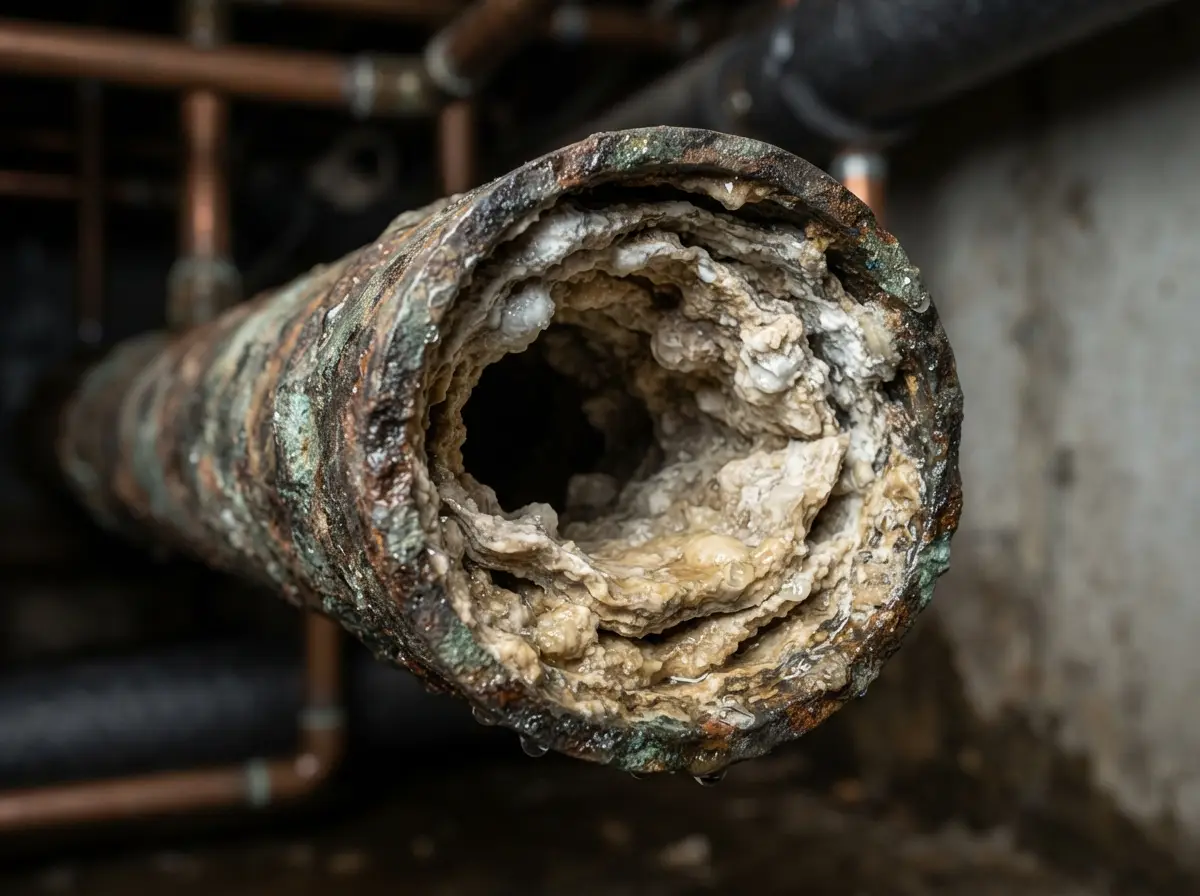
Repiping becomes worth evaluating when leaks recur in different locations, water flow is restricted throughout the home, exposed pipe shows widespread corrosion, or the same aging material runs through the entire system. A single accessible leak in otherwise sound pipe usually favors repair. There is no universal leak count that automatically means “repipe.” Inspect the wider system and compare its likely remaining risk with the cost and disruption of replacement.
Repair and repiping solve different problems. A repair corrects a known failure at one location. A repipe replaces a larger section of vulnerable material so the next weak point is less likely to become tomorrow’s emergency. The expensive mistake can happen in either direction: replacing healthy pipe too early or repeatedly opening walls to patch a system that is failing as a whole.
Start With the Pattern, Not the Last Leak
A pinhole in one short copper run may have a local cause. A damaged fitting may simply need replacement. But when a kitchen leak is followed by a bathroom leak and then another failure near the water heater, treating every event as unrelated can hide the larger issue.
Write down where leaks occurred, when they happened, what material failed, and whether the repair exposed corrosion nearby. That history helps distinguish a workmanship issue at one connection from deterioration distributed throughout the home.
One accessible defect, newer surrounding pipe, stable pressure, and no wider flow or corrosion symptoms.
Leaks in different rooms, aging material throughout, chronic low flow, discolored water, or repeated wall access.
One branch or addition uses vulnerable material while the remaining system tests well.
Confirm the failed material and extent before comparing proposals.
What Makes a Plumbing System Fail Over Time?
Pipe material and age
Galvanized steel can corrode internally, narrowing the opening before an exterior problem is obvious. Copper can develop localized corrosion or pinholes under certain combinations of water chemistry, flow, workmanship, and time. No material should be condemned by age alone, but original material in an older home belongs in the risk picture.
Pressure and velocity
Excessive pressure and high flow velocity can increase stress on valves, fittings, and pipe. A plumber may check static pressure, consider fluctuations, and look for undersized or poorly supported runs that contribute to noise and wear.
Water chemistry and deposits
Ventura County water sources vary, but local supplies are hard to very hard. Mineral deposits can reduce usable diameter and affect fixtures and equipment. Scale is not proof that a pipe will leak, yet it can explain declining flow and is relevant when judging an older system.
What a Useful Repiping Assessment Should Include
Map the repair history
Identify whether failures cluster at one fitting or appear across separate branches.
Identify every pipe material
Homes may contain galvanized steel, copper, PEX, or several generations of alterations.
Check pressure and flow
Separate a pipe-condition problem from a regulator, valve, fixture, or sizing problem.
Inspect accessible pipe
Look for corrosion, staining, improper supports, stressed joints, and prior patches.
Compare scopes in writing
Define branches, valves, wall openings, permits, patching, and warranties.
Repair, Partial Repipe, or Whole-Home Repipe?
| Option | Often fits when | Question to ask |
|---|---|---|
| Localized repair | The defect is isolated and surrounding pipe appears serviceable. | What evidence shows the rest of this branch is sound? |
| Partial repipe | One branch, room, addition, or accessible run is the primary concern. | Where will old and new materials connect? |
| Whole-home repipe | The same vulnerable material and failure pattern extend across the home. | What is included beyond pipe—valves, access, inspection, and restoration? |
A partial repipe can be a sensible middle ground, but only if the boundary is logical. Replacing easy-to-reach pipe while leaving equally deteriorated concealed sections may postpone rather than solve the problem. Conversely, a whole-home proposal should not be accepted merely because one leak was inconvenient.
PEX or Copper: How Should You Compare Materials?
PEX
Flexible routing can reduce fittings and wall openings in some homes. The proposal should specify product, sizing, support, transition fittings, and installation method.
Copper
Rigid copper is familiar and durable when designed and installed for the conditions. Routing, joint quality, water chemistry, and protection at penetrations still matter.
There is no honest one-material answer for every house. Access, local requirements, pipe sizing, exposure, budget, and homeowner preference affect the choice. Compare complete systems rather than a material name alone.
How Disruptive Is a Repipe?
Most repipes require planned access openings, water shutoffs, testing, inspection, and wall repair. Attic and crawlspace access may reduce interior openings, while slab-on-grade or multi-story homes require more routing decisions. Ask how floors will be protected, when water will be restored, and who coordinates inspection and patching.
How to Compare Repiping Estimates
Two prices are not comparable if one includes valves, fixture connections, permit coordination, drywall patching, and cleanup while another lists only pipe installation. Request a written scope showing material and sizing, areas included, restoration exclusions, shutoff time, testing, warranty, and how unexpected concealed conditions are handled.
Be cautious when an estimate assumes every leak is random without examining the system. Be equally cautious when a complete repipe is recommended before identifying the failed material and checking accessible conditions.
Need an honest repair-versus-repipe assessment?
Sespe Plumbing Pros can inspect the current failure and wider system, then explain whether a targeted pipe repair, partial replacement, or repiping service fits the evidence. Call 805-285-4021 for a free estimate.
Frequently Asked Questions
How many pipe leaks does it take before repiping makes sense?
There is no fixed number. Leaks in different locations over a short period, especially in the same aging material, are more meaningful than a single total.
Does one leak mean I need to repipe the whole house?
No. A single isolated failure in otherwise sound pipe is usually a repair problem. The plumber should explain what evidence points beyond that location.
Can part of a house be repiped?
Yes. A partial repipe may work when the concern is limited to a clearly defined branch or area. Document the old-to-new transition and what remains.
Is PEX always better than copper?
No. Both can be appropriate. Layout, code, water conditions, access, installation quality, and the written scope matter more than a universal ranking.
Will repiping improve low water pressure?
It can improve flow when corroded or undersized pipe is the cause. A closed valve, failing regulator, supply condition, or fixture restriction needs a different correction.
How long will water be off during a repipe?
It depends on scope and layout. Ask for planned shutoff periods and whether service will be restored at the end of each workday.
Are wall repairs included in a repiping estimate?
Sometimes, but never assume. The proposal should state who creates and patches access openings and what finish level is included.
Should I get multiple repiping estimates?
For a major project, comparing written scopes is sensible. Make sure each contractor is pricing the same branches, materials, permits, restoration, and warranty.